

Seoul 3-Day Itinerary for First-Time Visitors: Easy Korea Travel Plan
5월 20, 2026 | by 코트플
Planning a 3-day Seoul itinerary can feel overwhelming if this is your first time visiting Korea. Seoul has palaces, traditional neighborhoods, shopping streets, cafes, markets, modern districts, river views, and nightlife, so trying to see everything in three days is not realistic.
This itinerary is designed for first-time visitors who want a simple and practical Seoul travel plan. It focuses on easy routes, major areas, realistic pacing, and beginner-friendly transportation. Instead of rushing across the city, each day is built around nearby areas that fit well together.
If this is your first trip to Korea, start with our complete first-time Korea travel guide. If you are still choosing your hotel area, read our guide to where to stay in Seoul for first-time visitors before finalizing your itinerary.
Quick Answer: Best 3-Day Seoul Itinerary for First-Time Visitors
For a first trip to Seoul, spend Day 1 on classic Seoul, Day 2 on shopping and modern neighborhoods, and Day 3 on flexible local areas, cafes, markets, or a slower cultural route.
A good 3-day Seoul itinerary should not include too many distant places in one day. Choose 2 to 3 main areas per day and leave enough time for food, walking, subway transfers, cafes, and unexpected delays.
| Day | Theme | Main Areas | Best For |
|---|---|---|---|
| Day 1 | Classic Seoul | Gyeongbokgung, Bukchon, Insadong, Myeongdong | Palaces, tradition, first impressions |
| Day 2 | Modern Seoul | Hongdae, Yeonnam, Gangnam, Namsan | Cafes, shopping, city views, nightlife |
| Day 3 | Flexible Seoul | Seongsu, Seoul Forest, market, museum, or Han River | Relaxed travel, local atmosphere, backup plans |
Is 3 Days Enough for Seoul?
Three days in Seoul is enough for a first-time visitor to see the main highlights, but it is not enough to see everything. Seoul is a large city, and many attractions are spread across different neighborhoods.
With 3 days, you can experience a balanced mix of traditional Seoul, modern shopping areas, cafes, local food, and public transportation. However, you should avoid adding too many attractions to each day.
A realistic first Seoul trip should include time for:
- Subway transfers
- Walking between attractions
- Meals and cafes
- Shopping or browsing
- Rest after a long flight
- Getting slightly lost or changing plans
If you only have 3 days, focus on Seoul instead of trying to add too many day trips. If you have 5 to 7 days, you can consider adding places such as Suwon, Nami Island, DMZ, Busan, or other regional destinations.
3-Day Seoul Itinerary Overview
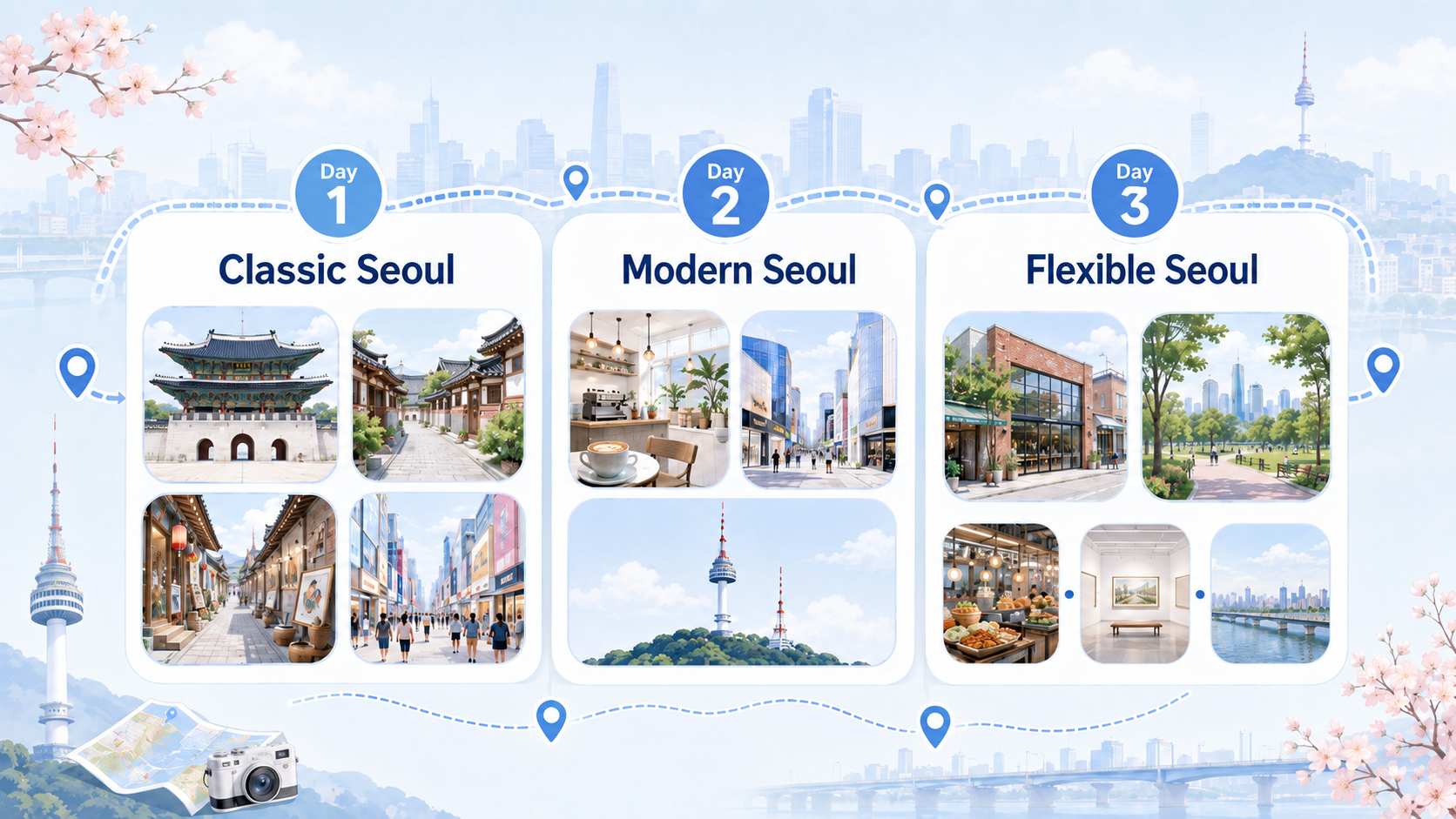
This itinerary is designed to reduce travel stress. Each day groups nearby or logically connected areas, so you do not spend the entire trip moving across the city.
| Time | Day 1 | Day 2 | Day 3 |
|---|---|---|---|
| Morning | Gyeongbokgung Palace | Hongdae or Yeonnam-dong | Seongsu or Seoul Forest |
| Afternoon | Bukchon Hanok Village and Insadong | Gangnam or shopping area | Market, museum, cafe, or shopping |
| Evening | Myeongdong | Namsan or city view | Han River, relaxed dinner, or final shopping |
If you arrive in Korea on Day 1 after a long flight, reduce the plan. Do not force a full palace and shopping day if you are tired. A slower first day is usually better than a packed schedule.
Before You Start: Prepare These Basics
Before following this 3-day Seoul itinerary, prepare a few basics. These will make your trip easier from the moment you arrive.
- Choose a hotel near a subway station
- Plan your airport transfer before landing
- Prepare mobile internet before arrival
- Install basic travel apps
- Prepare a T-money card for public transportation
- Save your hotel address in English and Korean
- Keep your itinerary realistic
If you are arriving through Incheon Airport, compare AREX, airport bus, taxi, and private transfer in our Incheon Airport to Seoul transportation guide.
For subway and bus travel, read our T-money card guide for tourists. You should also prepare useful apps with our best Korea travel apps guide.
Day 1: Classic Seoul for First-Time Visitors
Day 1 focuses on classic Seoul: palaces, traditional streets, hanok-style neighborhoods, and one of the most convenient shopping and food areas for visitors.
This route is good for first-time visitors because it gives you a clear introduction to Seoul’s history, culture, streets, and city energy without making the day too complicated.
Morning: Gyeongbokgung Palace
Start your first full day in Seoul with Gyeongbokgung Palace. It is one of the most popular historic attractions in Seoul and a common first stop for travelers who want to experience traditional Korea.
You do not need to rush through the palace. Walk slowly, take photos, and enjoy the open palace grounds. If you plan to rent hanbok nearby, allow extra time for changing clothes, taking photos, and returning the rental.
Day 1 Tip
If you arrive late the night before, do not start too early. A tired first morning can make the rest of the day harder. Start slowly and keep the first day flexible.
Late Morning or Lunch: Bukchon Hanok Village
After Gyeongbokgung, move toward Bukchon Hanok Village. Bukchon is known for traditional Korean houses and narrow streets. It is one of the most photographed areas in Seoul.
Because Bukchon is also a residential area, keep your visit respectful. Avoid loud behavior, do not block narrow streets for too long, and follow local signs if certain areas ask visitors to be quiet.
Afternoon: Insadong
Insadong is a good next stop because it is near the palace and Bukchon area. It is useful for souvenirs, tea houses, traditional-style shops, snacks, small galleries, and cultural streets.
For first-time visitors, Insadong is a good place to slow down. Instead of treating it as a quick photo stop, use it as a lunch, tea, or souvenir break.
Evening: Myeongdong
End Day 1 in Myeongdong. Myeongdong is convenient for shopping, street food, cosmetics, restaurants, and easy subway access. It is also one of the easiest areas for first-time visitors to understand.
If you are staying in Myeongdong or nearby, this is a comfortable way to finish the first day. You can eat dinner, walk around, shop lightly, and return to your hotel without a complicated route.
Day 1 Route Summary
| Stop | Main Purpose | Travel Tip |
|---|---|---|
| Gyeongbokgung Palace | Traditional Korea and palace visit | Go slowly and allow time for photos |
| Bukchon Hanok Village | Hanok streets and Seoul atmosphere | Be quiet and respectful in residential streets |
| Insadong | Souvenirs, tea, culture, walking | Good place for a slower afternoon break |
| Myeongdong | Food, shopping, evening walk | Convenient for first-time visitors |
Day 2: Modern Seoul, Shopping, Cafes, and City Views
Day 2 focuses on a more modern side of Seoul. You can choose Hongdae and Yeonnam for cafes, youth culture, and casual streets, or Gangnam for modern shopping, restaurants, and city atmosphere.
For a 3-day trip, do not try to do Hongdae, Gangnam, Namsan, and several shopping areas all in one day unless you are comfortable with a busy schedule. Choose the areas that match your travel style.
Morning: Hongdae or Yeonnam-dong
Hongdae is known for youth culture, cafes, casual restaurants, street energy, and nightlife. Nearby Yeonnam-dong has a more relaxed cafe and walking atmosphere.
This area is good for travelers who want a modern and casual start to the day. It is also a good place for brunch, coffee, shopping, and people-watching.
Alternative Morning: Gangnam
If Hongdae is not your style, you can start Day 2 in Gangnam instead. Gangnam is better for modern city streets, shopping, restaurants, clinics, business hotels, and a polished urban atmosphere.
Gangnam can be useful if you are staying in southern Seoul or if your interests are shopping, beauty, cafes, or modern city life. However, it is farther from some traditional attractions in northern Seoul.
Afternoon: Shopping or Cafe Time
Use the afternoon for flexible shopping or cafes. Seoul is not only about major tourist attractions. Many visitors enjoy Korea most when they slow down and explore neighborhoods, small shops, beauty stores, cafes, bakeries, and local streets.
Good afternoon options include:
- Hongdae and Yeonnam-dong cafes
- Myeongdong cosmetics and street food
- Gangnam shopping and restaurants
- Seongsu cafes and concept stores
- Department stores or malls on rainy days
Evening: Namsan or Seoul City View
For the evening, consider Namsan or another city-view spot if the weather is clear. A city view is a good way to end a Seoul day because it gives you a sense of the city’s scale.
If you are tired, do not force a night view stop. A comfortable dinner near your hotel can be a better choice, especially if you walked a lot during the day.
Day 2 Route Options
| Option | Best For | Suggested Flow |
|---|---|---|
| Hongdae Route | Cafes, nightlife, casual shopping | Hongdae → Yeonnam-dong → Myeongdong or Namsan |
| Gangnam Route | Modern Seoul, shopping, restaurants | Gangnam → COEX or nearby area → dinner |
| Relaxed Route | Slow travel and less walking | Cafe area → shopping → dinner near hotel |
Day 3: Flexible Seoul, Local Neighborhoods, or Backup Plans
Day 3 should be flexible. By your third day, you may want to revisit a favorite area, shop more, eat something specific, or slow down. This day can also work as a backup day if weather or jet lag changed your earlier plans.
Instead of forcing another packed schedule, choose one main theme for Day 3.
Option 1: Seongsu and Seoul Forest
Seongsu is a popular area for cafes, small shops, concept stores, and a more local urban atmosphere. Seoul Forest can also be a good option if you want a slower outdoor break.
This route is better for visitors who enjoy cafes, design shops, walking, and a less traditional tourist route.
Option 2: Market and Food Route
If you want food and local market energy, use Day 3 for a market-focused route. Markets can be fun, but they may also feel busy and confusing, so keep the plan simple.
A market route works best when you do not add too many distant attractions on the same day. Choose one main market area and combine it with a nearby cafe, shopping street, or simple dinner plan.
Option 3: Museum or Indoor Route
If the weather is bad, choose an indoor route. Museums, malls, department stores, galleries, and cafes are useful backup options for rainy, very hot, or very cold days.
This is why your third day should stay flexible. Seoul weather and energy levels can change your ideal plan.
Option 4: Han River Evening
If the weather is good, ending your Seoul trip near the Han River can be relaxing. You can walk, rest, enjoy the view, and have a slower final evening.
This is a good option if you want your trip to feel less rushed. However, check the weather and travel distance from your hotel before deciding.
Where to Stay for This 3-Day Seoul Itinerary
For this itinerary, the easiest areas to stay are Myeongdong, Jongno, Insadong, Seoul Station, or Hongdae. These areas make it easier to reach palaces, shopping streets, cafes, airport transport, and subway routes.
If this is your first time in Seoul, do not choose accommodation only by price. A cheaper hotel far from the subway can make each day more tiring.
| Area | Why It Works | Best For |
|---|---|---|
| Myeongdong | Central, convenient, shopping and food nearby | Most first-time visitors |
| Jongno / Insadong | Good for palaces, culture, and traditional streets | Culture-focused travelers |
| Seoul Station | Useful for AREX, KTX, and transport connections | Airport and train access |
| Hongdae | Lively, youthful, cafes and nightlife | Younger travelers and nightlife |
For a deeper comparison, read our where to stay in Seoul guide.
How to Get Around Seoul During This Itinerary
The subway is usually the easiest way for first-time visitors to move around Seoul. Buses are also useful, but they can feel more confusing if you are not used to Korean routes and stops.
A T-money card is recommended if you plan to use public transportation more than once or twice. It makes subway and bus rides smoother and reduces the need to buy single-use tickets each time.
For this itinerary, you should prepare:
- A T-money card
- A map app
- A translation app
- Mobile internet
- Your hotel address saved on your phone
- Comfortable walking shoes
Check our T-money card guide and Korea travel apps guide before your trip.
What to Eat During 3 Days in Seoul
Food is a major part of a Seoul trip. However, for a first visit, you do not need to plan every meal perfectly. It is better to choose general food areas and leave room for spontaneous choices.
Beginner-friendly food ideas include:
- Korean barbecue
- Bibimbap
- Gimbap
- Tteokbokki
- Korean fried chicken
- Street food in Myeongdong or market areas
- Cafe desserts and bakery items
Use a map app and translation app to check menus, reviews, and opening hours. If a restaurant looks too crowded or confusing, have a backup option nearby.
Common Mistakes in a 3-Day Seoul Itinerary
Many first-time visitors make the same itinerary mistakes in Seoul. Avoiding these mistakes can make your trip much smoother.
1. Planning Too Many Places in One Day
Seoul looks easy on a map, but moving between neighborhoods can take time. Choose 2 or 3 main areas per day instead of trying to visit every famous place.
2. Ignoring Subway Station Exits
Large stations can have many exits. Taking the wrong exit can add unnecessary walking time. Check the correct exit before leaving the station.
3. Choosing a Hotel Far from Public Transportation
A cheaper hotel far from the subway may cost you time and energy every day. For a short trip, location is very important.
4. Not Planning Airport Transfer in Advance
After a long flight, figuring out airport transportation can be stressful. Decide whether you will use AREX, airport bus, taxi, or private transfer before landing.
5. Forgetting Weather and Walking Time
Seoul involves a lot of walking. Rain, heat, cold, or tiredness can change your plan. Keep your schedule flexible.
6. Making Day 1 Too Ambitious
Your first day may be affected by jet lag, luggage, hotel check-in, and airport transfer. Keep Day 1 easier if you arrive the same morning or late the night before.
Recommended 3-Day Seoul Itinerary by Travel Style
You can adjust this itinerary depending on your travel style. Not every visitor wants the same Seoul experience.
| Travel Style | Recommended Focus | Best Areas |
|---|---|---|
| Classic first trip | Palace, hanok, Myeongdong, city view | Jongno, Insadong, Myeongdong |
| Cafe and shopping trip | Cafes, beauty stores, fashion, concept shops | Hongdae, Yeonnam, Seongsu, Gangnam |
| Culture-focused trip | Palaces, museums, traditional streets | Jongno, Insadong, Bukchon |
| Relaxed trip | Slow neighborhoods, cafes, river, light shopping | Seongsu, Seoul Forest, Han River areas |
Final Recommendation
A good 3-day Seoul itinerary should be simple, realistic, and flexible. For first-time visitors, it is better to understand Seoul clearly than to rush through too many attractions.
Use Day 1 for classic Seoul, Day 2 for modern neighborhoods and shopping, and Day 3 for flexible local areas, cafes, markets, museums, or a slower route. Stay near public transportation, prepare your apps and T-money card, and avoid overplanning.
Seoul is an easy city to enjoy when your first setup is ready. Plan the basics before arrival, then leave enough space to enjoy food, streets, cafes, and unexpected discoveries.
Planning Your First Korea Trip?
Start with these beginner-friendly Korea travel guides before building your itinerary.
FAQ
Is 3 days enough for Seoul?
Yes, 3 days is enough for a first visit to Seoul if you focus on the main areas. You can see palaces, traditional neighborhoods, shopping areas, cafes, and city views, but you should not try to see everything.
What should I do on my first day in Seoul?
For a first day in Seoul, visit Gyeongbokgung Palace, Bukchon Hanok Village, Insadong, and Myeongdong. This gives you a good mix of traditional Korea, walking streets, food, and shopping.
Where should I stay for a 3-day Seoul itinerary?
Myeongdong, Jongno, Insadong, Seoul Station, and Hongdae are practical areas for a 3-day Seoul itinerary. The best choice depends on your itinerary, airport transfer plan, and travel style.
Should I visit Suwon during a 3-day Seoul trip?
If it is your first time in Korea and you only have 3 days, it is usually better to focus on Seoul. If you have 5 to 7 days, Suwon can be a good day trip, especially for Hwaseong Fortress.
Do I need a T-money card for 3 days in Seoul?
A T-money card is recommended if you plan to use the subway or buses more than once or twice. It makes public transportation easier and more convenient for tourists.
What is the best way to get around Seoul?
The subway is usually the easiest way for first-time visitors to get around Seoul. Buses are also useful, but they can feel more confusing if you are new to Korea.
How many areas should I visit per day in Seoul?
For a first trip, choose 2 or 3 main areas per day. This gives you enough time for transportation, walking, meals, cafes, and unexpected delays.
What apps do I need for a Seoul itinerary?
Prepare a map app, translation app, transit or subway app, weather app, and notes or itinerary app. These apps help with routes, Korean language, weather, and daily planning.
Is Seoul good for first-time solo travelers?
Yes, Seoul can be a good city for first-time solo travelers because public transportation is convenient, many areas are busy and easy to explore, and there are many cafes, shops, and attractions.
What should I avoid during a short Seoul trip?
Avoid planning too many distant places in one day, choosing accommodation far from the subway, ignoring airport transfer planning, and leaving essential apps or mobile internet setup until after arrival.