

First Time in Korea: Complete Travel Guide for Beginners
5월 16, 2026 | by aghyeok3195@gmail.com
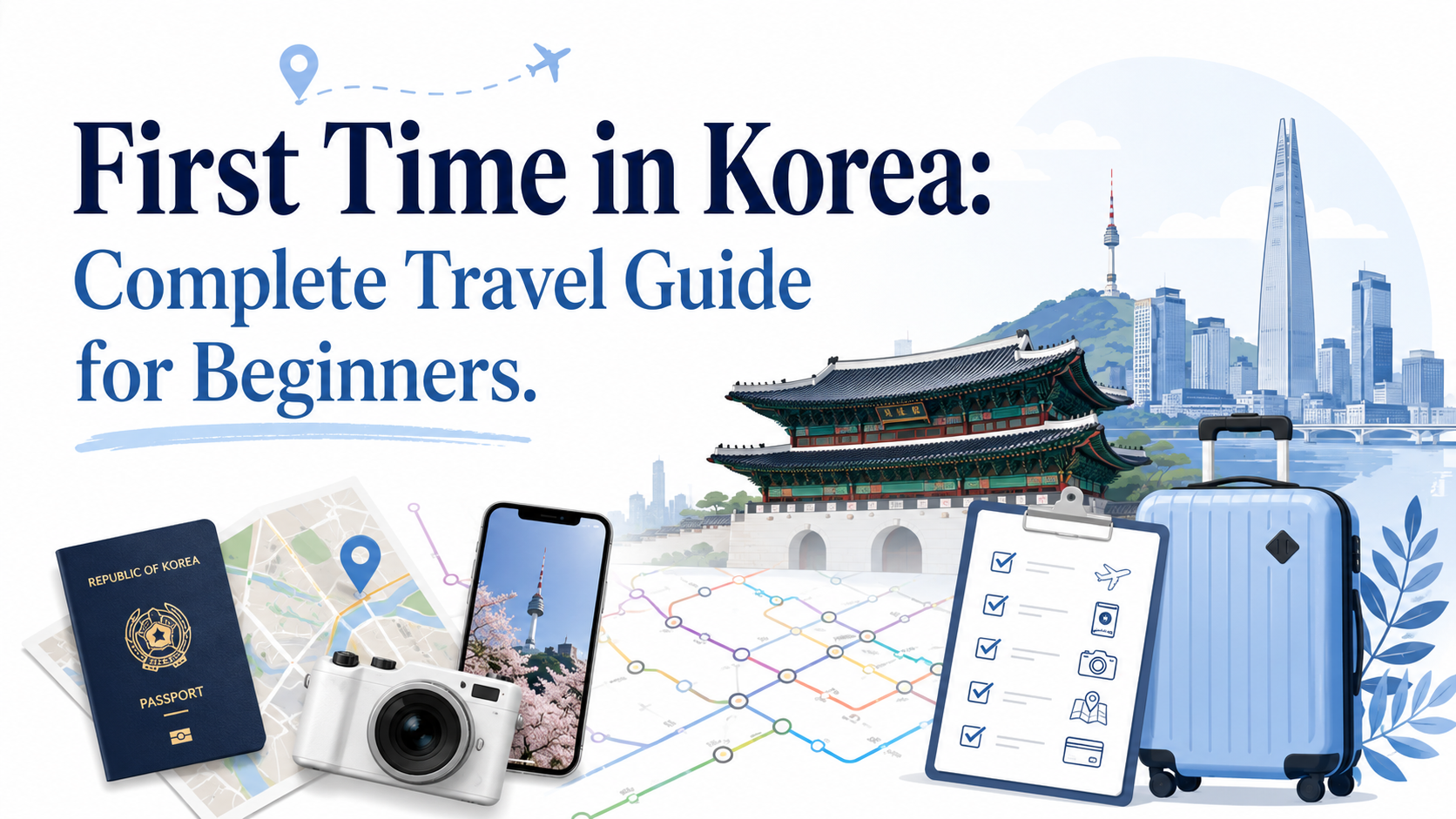
Visiting Korea for the first time can feel exciting, but it can also be confusing if you do not know how transportation, mobile internet, accommodation areas, and local travel systems work.
This guide is designed for foreign visitors planning their first trip to South Korea. It explains the basic things you should know before arriving, including when to visit, how many days to spend, where to stay, how to use public transportation, what to prepare, and which common mistakes to avoid.
Quick Summary for First-Time Visitors to Korea
If this is your first trip to Korea, start with Seoul, prepare mobile internet before arrival, learn the basics of public transportation, and keep your itinerary realistic. Most first-time visitors should plan at least 5 to 7 days to enjoy Korea without rushing.
| Topic | Recommendation |
|---|---|
| Best starting city | Seoul |
| Recommended trip length | 5 to 7 days |
| Best seasons | Spring and autumn |
| Essential transport item | T-money card |
| Internet option | eSIM, SIM card, or portable Wi-Fi |
Is Korea Good for First-Time Travelers?
Yes. South Korea is a convenient country for first-time travelers because public transportation is reliable, major tourist areas are easy to navigate, and many signs in Seoul, airports, subway stations, and popular attractions include English.
However, Korea can still feel confusing if you arrive without preparation. Some visitors struggle with local map apps, transportation cards, airport transfers, restaurant ordering, and choosing the right area to stay.
The key is not to plan too many places in one day. Korea is easy to travel in, but moving between cities, districts, and attractions still takes time.
Best Time to Visit Korea
The best time to visit Korea is usually spring or autumn. These seasons are popular because the weather is more comfortable for walking, sightseeing, and outdoor activities.
Spring is known for cherry blossoms, mild weather, and bright city scenery. Autumn is known for clear skies, colorful foliage, and comfortable temperatures. These two seasons are often the easiest for first-time visitors.
Summer can be hot and humid, and heavy rain can affect travel plans. Winter can be very cold, especially for travelers who are not used to freezing temperatures. If you visit in winter, prepare warm clothing, gloves, and comfortable shoes.
How Many Days Do You Need in Korea?
For a first trip to Korea, 5 to 7 days is a practical starting point. This gives you enough time to experience Seoul and add one or two day trips without rushing too much.
A 3-day trip can work if you only focus on Seoul. A 5-day trip is better for first-time visitors who want to see Seoul and a nearby destination. A 7-day trip gives more flexibility for Busan, Gyeongju, Jeju, Suwon, or another regional destination.
| Trip Length | Best For | Suggested Plan |
|---|---|---|
| 3 days | Very short first visit | Focus on Seoul only |
| 5 days | First-time visitors | Seoul plus one nearby day trip |
| 7 days | Balanced Korea trip | Seoul plus Busan, Gyeongju, Jeju, or another region |
| 10 days or more | Deeper travel | Seoul, regional cities, cultural destinations, and slower travel |
Where to Stay in Korea for the First Time
For most first-time visitors, staying in Seoul is the easiest choice. Seoul has strong transportation connections, many accommodation options, major attractions, shopping areas, restaurants, and easy access to day trips.
Popular areas include Myeongdong, Hongdae, Insadong, Jongno, Gangnam, and Seoul Station. Each area has a different travel style.
Myeongdong is convenient for shopping and first-time sightseeing. Hongdae is better for nightlife, cafes, and younger travelers. Insadong and Jongno are good for traditional culture and palaces. Seoul Station is useful for transportation. Gangnam is modern and convenient, but it may not be the best base for every first-time itinerary.
For a detailed area comparison, read our Where to Stay in Seoul for First-Time Visitors guide.
How to Get from Incheon Airport to Seoul
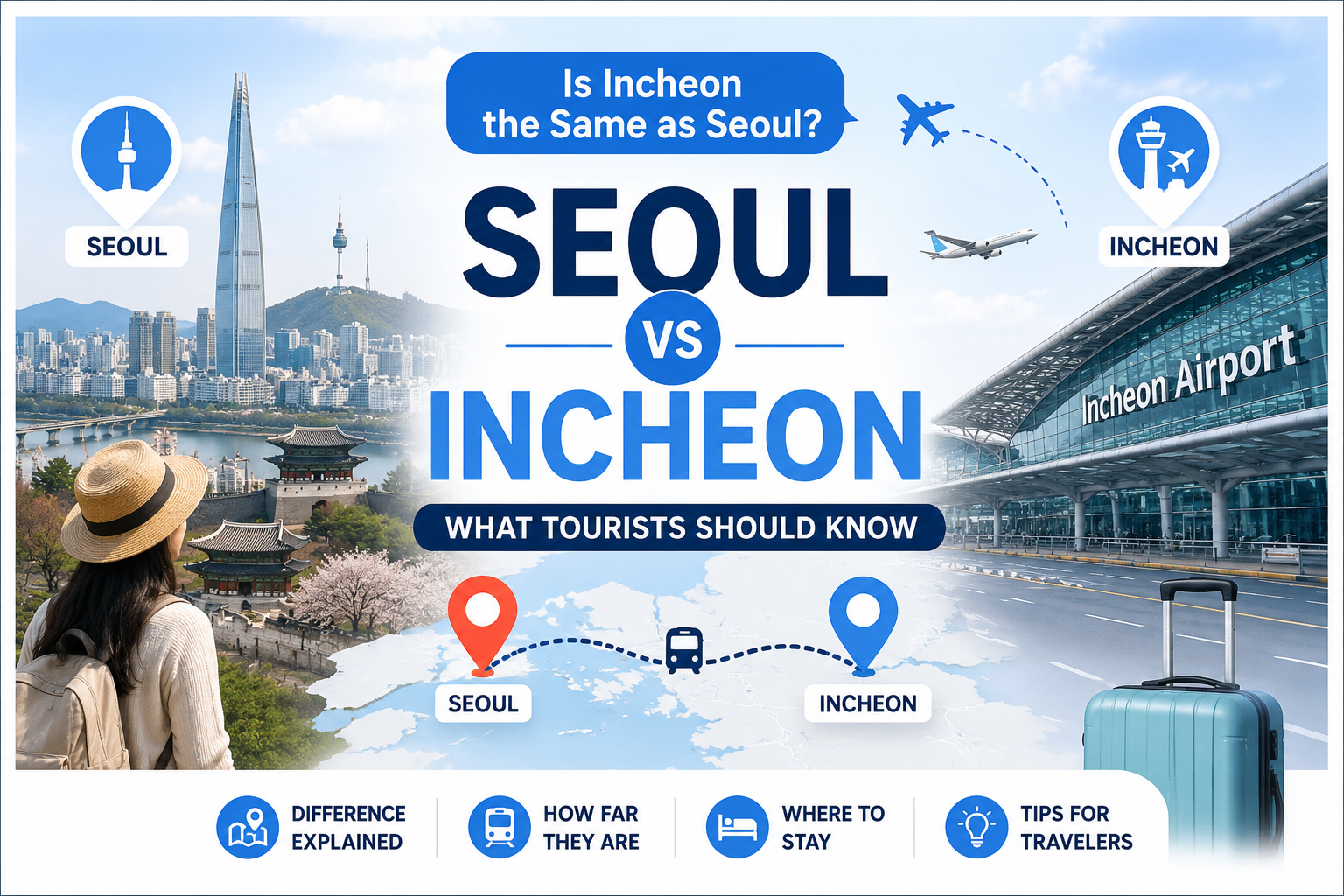
Most international travelers arrive at Incheon International Airport. From the airport, the main ways to reach Seoul are the AREX train, airport limousine bus, taxi, or private transfer.
The AREX train is often useful for travelers heading toward Seoul Station. Airport buses can be convenient if your hotel is near a bus stop. Taxis and private transfers are easier if you have heavy luggage, arrive late, or travel with family.
Before arrival, check your hotel location and decide your airport transfer method. Choosing transportation after landing can be stressful if you are tired or carrying large bags.
For a full comparison, read our Incheon Airport to Seoul transportation guide.
How to Use Public Transportation in Korea
For a detailed explanation of transportation cards, read our T-money card guide for tourists, including where to buy one, how to charge it, and how to use it on subways and buses.
Korea has a strong public transportation system, especially in Seoul and major cities. Subways and buses are widely used by both locals and visitors.
For first-time visitors, the subway is usually the easiest way to move around Seoul. Subway routes are clearly marked, station names are often shown in English, and major tourist areas are well connected.
Buses are also useful, but they can be more difficult for beginners because routes, stops, and directions may feel less familiar. Once you are comfortable with Korean map apps, buses become much easier to use.
If you plan to use public transportation in Seoul, read our Seoul Subway Guide for Tourists.
T-money Card Guide for Visitors
A T-money card is a rechargeable transportation card used for subways, buses, taxis, and some convenience store payments in Korea.
For visitors, it is one of the most useful items to get after arriving. It helps you avoid buying single-use subway tickets and makes transfers between subways and buses easier.
You can usually buy a T-money card at convenience stores, subway stations, or airport transport centers. After buying the card, you need to charge it with money before using it.
Internet, eSIM, and Wi-Fi in Korea
Having mobile internet is very important when traveling in Korea. You will likely need it for maps, translation, transportation routes, restaurant searches, and communication.
Visitors can use eSIM, physical SIM cards, portable Wi-Fi devices, or free public Wi-Fi. For many travelers, eSIM is convenient because it can be prepared before arrival and used immediately after landing.
Portable Wi-Fi can be useful for groups, while SIM cards may be preferred by travelers who want a local number or longer usage. Free Wi-Fi exists in many places, but it is not reliable enough as your only internet option.
Essential Apps for Traveling in Korea
Some apps can make Korea travel much easier. Map, translation, transportation, and messaging apps are especially helpful for first-time visitors.
Many travelers find that relying only on Google Maps can be limited in Korea. It is helpful to prepare local map or transportation apps before your trip.
At minimum, prepare a translation app, a map app, and a transportation app before arrival. Downloading them after landing is possible, but it is easier to set them up before you travel.
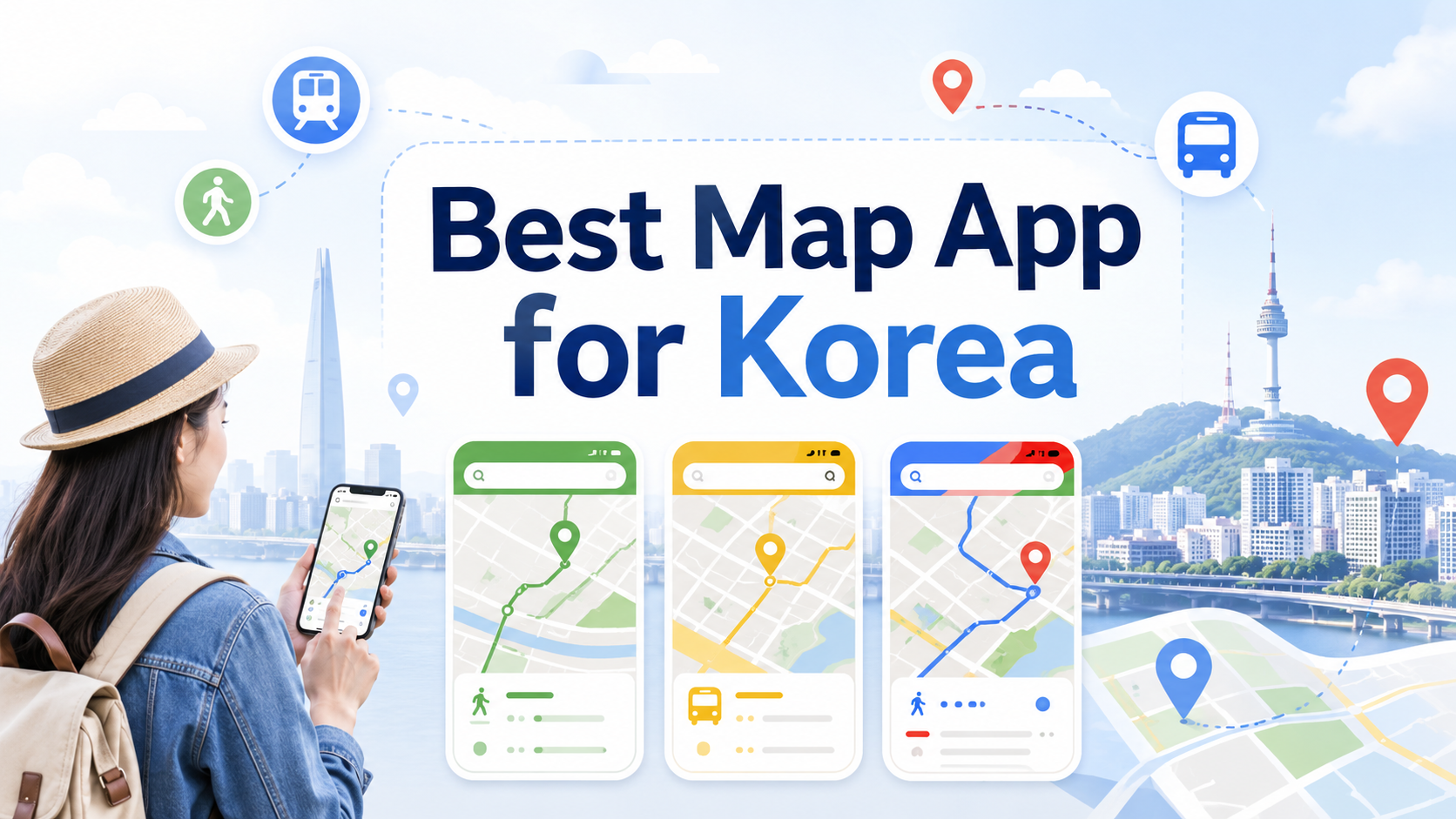
Before arriving, install at least one local map app. Our Best Map App for Korea Tourists guide explains how to use Naver Map, KakaoMap, and Google Maps in Korea.
For a broader app checklist, read our Best Korea Travel Apps for Tourists guide.
Korea Travel Essentials Checklist
Before visiting Korea, prepare the basic items that will make your first few days easier. You do not need to overpack, but some essentials can prevent common travel problems.
| Item | Why You Need It |
|---|---|
| Passport | Required for entry, hotel check-in, and identification |
| eSIM or SIM card | Needed for maps, translation, and transportation |
| T-money card | Useful for subways, buses, and some payments |
| Translation app | Helpful in restaurants, markets, taxis, and local shops |
| Korea-friendly map app | Important for subway routes, walking directions, restaurants, hotels, and local place searches |
| Comfortable shoes | Korea travel often involves a lot of walking and stairs |
| Power adapter | Useful depending on your device plug type |
| Travel insurance | Recommended for unexpected health, luggage, or travel issues |
Basic Korean Etiquette for Tourists
Korea is generally welcoming to tourists, but knowing basic etiquette can make your trip smoother.
On public transportation, try to speak quietly and avoid taking priority seats when they are needed by elderly, pregnant, or disabled passengers. In restaurants, wait to be seated if the place is busy, and be careful not to block narrow aisles with luggage.
When visiting palaces, temples, or cultural heritage sites, follow signs and avoid touching restricted objects. If you are unsure, watch how locals behave or ask staff politely.
Common Mistakes First-Time Visitors Make
First-time visitors often make similar mistakes when planning Korea travel. These mistakes are easy to avoid if you prepare in advance.
- Trying to visit too many cities in a short trip
- Choosing accommodation without checking subway access
- Arriving without mobile internet prepared
- Relying only on Google Maps for every route
- Underestimating walking time between attractions
- Not checking the season and weather before packing
- Leaving airport transfer decisions until after arrival
The biggest mistake is planning an itinerary that looks good on a map but feels exhausting in real life. Korea has many attractive places, but your first trip will be better if you travel at a realistic pace.
For more practical examples, read our Common Mistakes First-Time Visitors Make in Korea guide.
Simple First-Time Korea Itinerary
A simple first-time Korea itinerary can start with Seoul. Spend the first few days exploring palaces, traditional neighborhoods, markets, shopping streets, and modern districts.
After that, add one or two day trips depending on your interests. Suwon can be good for fortress history and a day trip from Seoul. DMZ tours are popular for visitors interested in modern Korean history. Nami Island is often chosen for scenery and relaxed travel.
If you have more time, consider adding Busan, Gyeongju, Jeonju, or Jeju. These destinations give you a broader view of Korea beyond Seoul.
For a simple Seoul route, start with our Seoul 3-Day Itinerary for First-Time Visitors.
Final Tips Before Your Korea Trip
Before your trip, confirm your accommodation location, airport transfer method, mobile internet option, and first-day route. These four things can make your arrival day much easier.
Also, do not try to plan every minute of your trip. Leave some extra time for cafes, markets, transportation delays, weather changes, and unexpected discoveries.
Korea is a great destination for first-time visitors, especially if you prepare the basics before arrival. Start with simple plans, use reliable transportation, and build your route around the places that matter most to you.
Planning Your First Korea Trip?
Start with these beginner-friendly Korea travel guides before building your itinerary.
- Best Map App for Korea Tourists
- Best Korea Travel Apps for Tourists
- How to Use T-money Card in Korea
- How to Use Seoul Subway for Tourists
- How to Get from Incheon Airport to Seoul
- Where to Stay in Seoul for First-Time Visitors
- Seoul 3-Day Itinerary for First-Time Visitors
- Common Mistakes First-Time Visitors Make in Korea
FAQ
Is Korea easy to travel without speaking Korean?
Yes. Major tourist areas are manageable without speaking Korean, especially in Seoul. However, a translation app is very helpful for restaurants, taxis, local markets, and smaller cities.
Is Seoul enough for a first trip to Korea?
Seoul is a good starting point for a first trip. If you have only 3 to 5 days, Seoul and one nearby day trip can be enough. If you have 7 days or more, adding another region is a good idea.
Do I need a T-money card in Korea?
Yes. A T-money card is very useful for subways and buses. It makes public transportation easier and helps you avoid buying single-use tickets every time.
Should I prepare eSIM before arriving in Korea?
Preparing eSIM before arrival is convenient because you can use mobile internet as soon as you land. This is helpful for maps, translation, airport transport, and contacting your accommodation.
What is the best area to stay in Seoul for first-time visitors?
Myeongdong, Hongdae, Jongno, Insadong, and Seoul Station are common choices for first-time visitors. The best area depends on your itinerary, budget, and transportation needs.
How many days are enough for a first Korea trip?
Five to seven days is a good starting point. Three days can work for Seoul only, while seven days gives you more time for day trips or regional travel.
What should I avoid on my first Korea trip?
Avoid planning too many places in one day, choosing accommodation far from public transportation, arriving without mobile internet, and ignoring seasonal weather conditions.
What map app should I use in Korea?
For most first-time visitors, it is better to prepare a Korea-friendly local map app such as Naver Map or KakaoMap. Google Maps can still help with general planning, but tourists should not rely on it as their only navigation app in Korea.
“`RELATED POSTS
View all

Best Map App for Korea Tourists: Naver Map, KakaoMap, and Google Maps
5월 29, 2026 | by aghyeok3195@gmail.com

Where to Stay in Seoul for First-Time Visitors: Best Areas Explained
5월 18, 2026 | by aghyeok3195@gmail.com
Is Incheon the Same as Seoul? What Tourists Should Know
6월 1, 2026 | by aghyeok3195@gmail.com