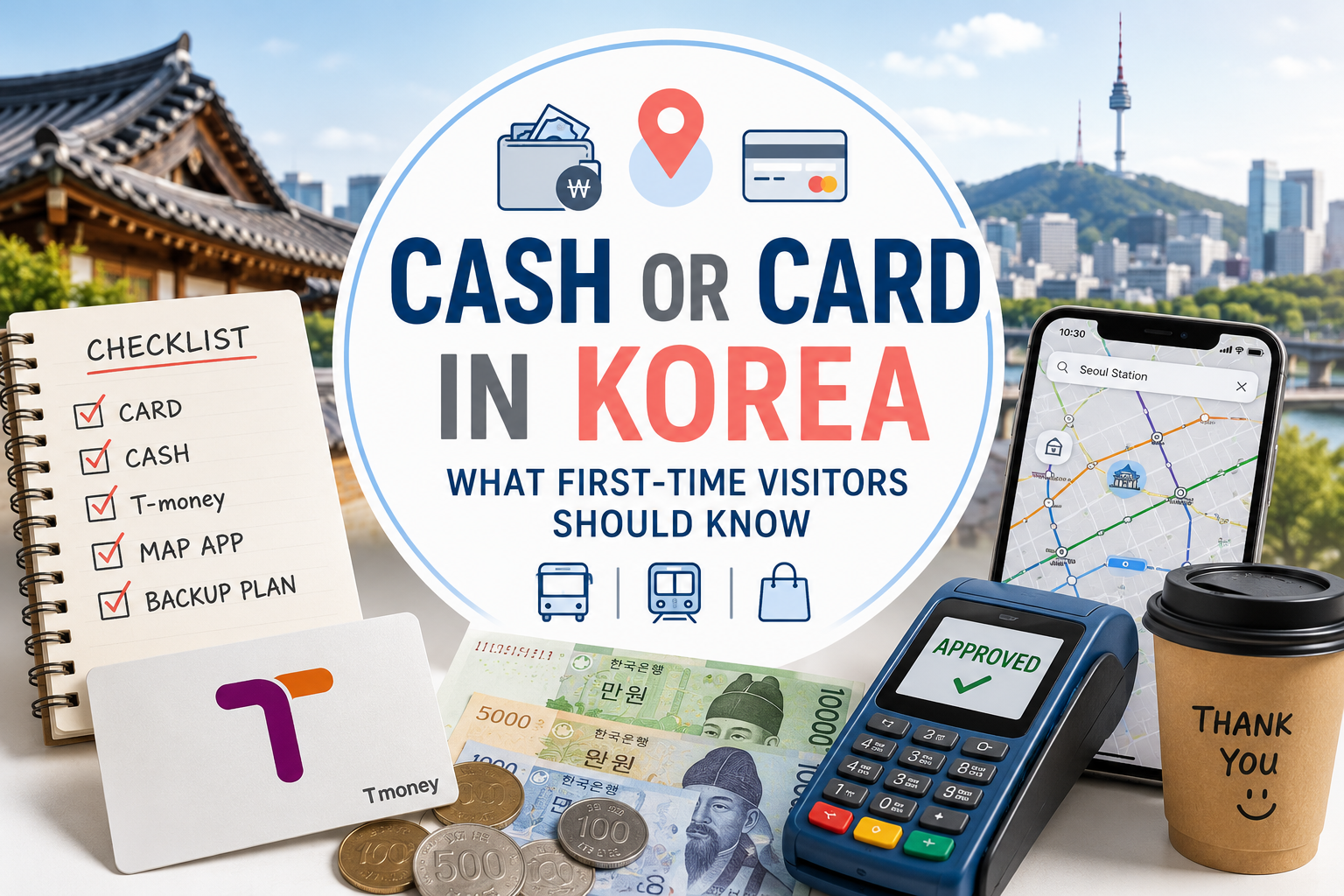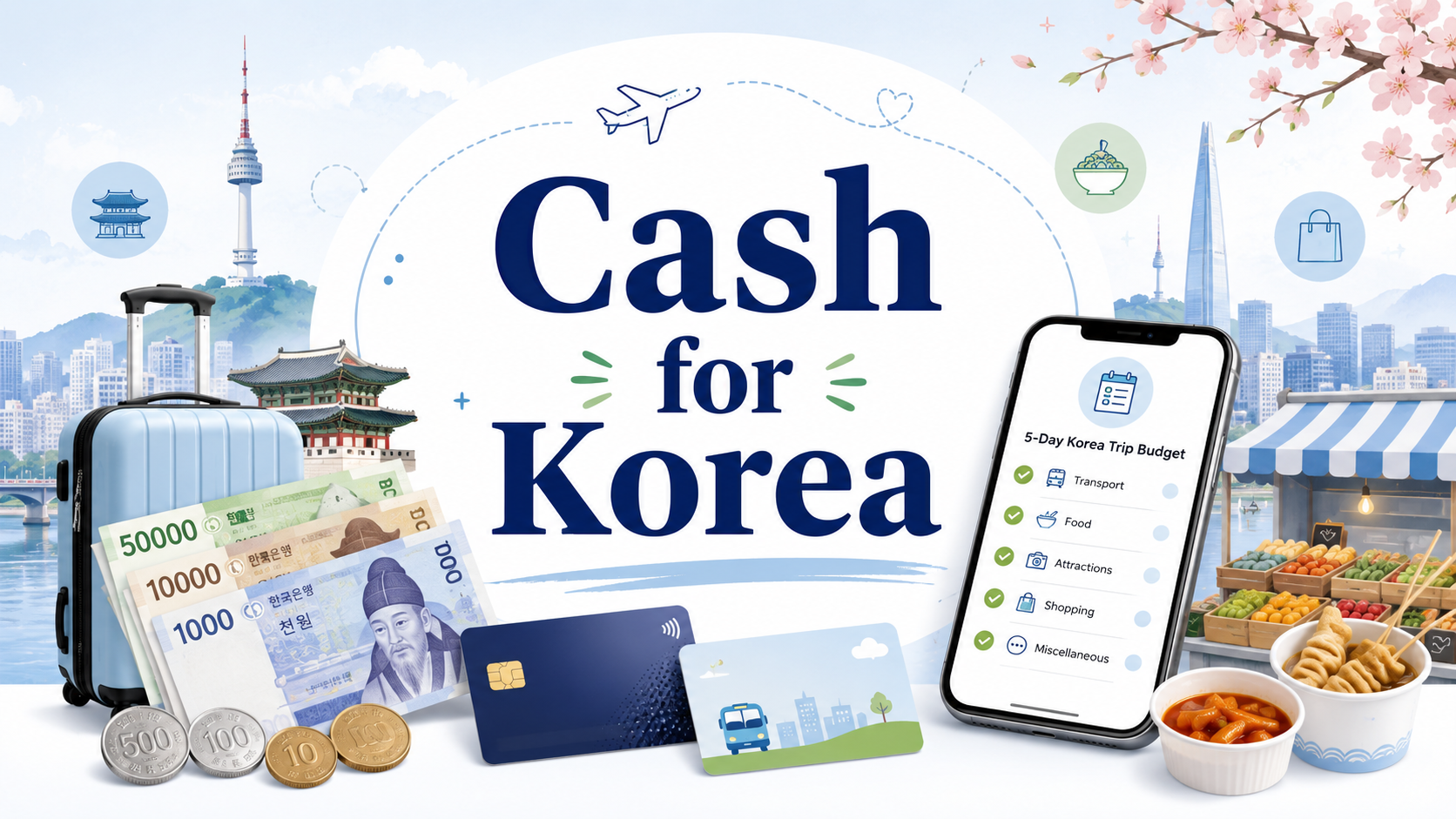
For a 5-day Korea trip, many tourists should prepare about 100,000–200,000 KRW in cash as backup. Most payments in Korea can be made by card, but cash is still useful for T-money charging, street food, traditional markets, small shops, coin lockers, and emergency situations.
You do not need to carry your entire travel budget in cash. In major cities such as Seoul, Busan, and Incheon, cards are widely used in hotels, restaurants, cafes, convenience stores, shopping malls, and many tourist areas. However, first-time visitors should still carry some Korean won because not every travel situation is card-only.
This guide explains how much cash to bring to Korea for 5 days, when tourists need cash, how much Korean won to carry per day, how cards and T-money work, and common cash mistakes to avoid. For a broader travel budget overview, read our How Much Money to Bring to Korea guide.
Quick Answer: How Much Cash Should You Bring to Korea for 5 Days?
For most tourists, 100,000–200,000 KRW in cash is a practical amount for a 5-day Korea trip. This is not your total travel budget. It is mainly backup cash for transportation card charging, small food purchases, markets, street food, and situations where card payment is inconvenient.
If you plan to use cards for most restaurants, shopping, hotels, and cafes, you can stay closer to 100,000 KRW. If you plan to visit markets, eat street food often, use taxis, or want a larger emergency buffer, 200,000 KRW or more may feel safer.
| Travel Style | Suggested Cash for 5 Days | Best For |
|---|---|---|
| Card-focused traveler | 80,000–120,000 KRW | Mostly card payments, light backup cash |
| Average tourist | 100,000–200,000 KRW | T-money, snacks, markets, small payments, backup |
| Cash-heavy traveler | 200,000–300,000 KRW | Markets, street food, taxis, local shops, larger buffer |
Do Tourists Need Cash in Korea?
Yes, tourists should carry some cash in Korea, but most visitors do not need to rely mainly on cash. Korea is highly card-friendly in many everyday situations, especially in major cities and tourist areas.
Cards are commonly used at hotels, cafes, convenience stores, department stores, restaurants, museums, attractions, and shopping areas. However, cash can still be useful in smaller or more local situations.
Cash Is Useful For:
- Charging a T-money card
- Street food stalls
- Traditional markets
- Small local shops
- Coin lockers or small machines
- Emergency backup payments
- Some taxis or situations where card payment fails
- Small purchases where card payment feels inconvenient
If you are deciding how much of your trip budget should be cash and how much should be card, read our Cash or Card in Korea guide.
How Much Korean Won Should You Carry Per Day?
For a 5-day Korea trip, many tourists can carry around 20,000–50,000 KRW per day in their wallet and keep the rest safely at the hotel. You do not need to carry all your cash every day.
The right daily amount depends on your itinerary. A shopping mall and cafe day may require very little cash. A market, street food, and public transportation day may require more.
| Daily Situation | Suggested Cash to Carry | Reason |
|---|---|---|
| Mostly cafes, restaurants, shopping malls | 20,000–30,000 KRW | Cards will likely cover most payments |
| Markets, street food, subway, small shops | 30,000–50,000 KRW | Cash is more useful for small local purchases |
| Day trip or uncertain route | 50,000–80,000 KRW | Extra backup is useful away from your hotel area |
Suggested Cash Amount by Travel Style
Not every tourist needs the same amount of cash. A traveler who uses cards, stays in central Seoul, and eats at regular restaurants may need much less cash than someone visiting markets, smaller towns, or street food areas.
Budget Traveler
If you are a budget traveler who plans to use cards for most meals and shopping, around 80,000–120,000 KRW in cash may be enough for 5 days. This gives you backup cash for T-money charging, snacks, small food stalls, and emergencies.
Average First-Time Visitor
For most first-time visitors, 100,000–200,000 KRW is a more comfortable range. This amount gives you flexibility without carrying too much cash.
Market and Street Food Traveler
If you plan to visit traditional markets, eat street food often, use cash at small shops, or take taxis occasionally, 200,000–300,000 KRW may feel more comfortable.
Family or Group Traveler
Families and groups may want more backup cash because small payments can add up quickly. However, it is still better not to carry too much cash in one wallet. Split cash between adults or keep some at your accommodation.
What You May Need Cash For in Korea
Cash is most useful for small, practical travel situations. Even if you use your card for most payments, having Korean won ready can prevent small problems during your trip.
| Situation | Cash Needed? | Tourist Tip |
|---|---|---|
| T-money charging | Often useful | Carry small bills for transportation card charging |
| Street food | Useful | Cash can be easier at small stalls |
| Traditional markets | Useful | Small bills help with quick payments |
| Cafes and restaurants | Usually not necessary | Cards are usually convenient in major areas |
| Taxis | Backup useful | Card may work, but cash backup is helpful |
| Emergency situations | Recommended | Keep some emergency cash separate |
Cash vs Card in Korea for Tourists
For most tourists, the best payment setup in Korea is not cash only or card only. A practical setup is to use cards for most major payments and carry Korean won cash for small, local, or backup situations.
Use cards for hotels, shopping malls, cafes, convenience stores, restaurants, and attractions when possible. Use cash for T-money charging, markets, street food, small purchases, and emergencies.
Practical Tip
Do not exchange or carry your entire 5-day travel budget in cash. Bring enough cash for small payments and backup, then use cards for larger purchases when possible.
Do You Need Cash for T-money?
Tourists should prepare some cash for T-money charging. T-money is one of the most useful transportation cards for visitors because it can be used for subways and buses in Korea.
Even if you plan to pay by card for most of your trip, cash can be helpful when buying or charging transportation cards. This is one of the main reasons first-time visitors should not arrive with zero Korean won.
For full details, read our T-money Card Korea guide.
Airport Arrival Cash Tips
When you arrive at Incheon Airport, you may need cash for transportation card charging, small purchases, or backup. However, you do not need to exchange all your money at the airport unless you want convenience.
A practical approach is to arrive with a small amount of Korean won or exchange a small amount at the airport, then manage the rest later depending on your travel style.
Before Leaving the Airport, Check:
- Do you have mobile internet?
- Do you have your hotel address saved?
- Do you have a payment card that works overseas?
- Do you have some Korean won cash?
- Do you know your airport transfer method?
- Do you need to buy or charge a T-money card?
If you are still planning your airport route, read our Incheon Airport to Seoul guide.
Should You Exchange Money Before Going to Korea?
You do not always need to exchange a large amount before going to Korea. Many tourists prepare a small amount of Korean won before arrival or exchange a small amount at the airport for immediate needs.
The best choice depends on your home country, exchange rates, bank fees, card fees, and comfort level. If you feel nervous arriving without any local currency, bring a small amount of Korean won in advance.
Simple Approach for First-Time Visitors
- Prepare some Korean won before arrival if convenient
- Do not carry your entire travel budget in cash
- Use cards for larger payments
- Keep small bills for transportation and markets
- Keep emergency cash separate from your daily wallet
How Much Cash Is Too Much?
Carrying too much cash can be inconvenient and stressful. Korea is card-friendly enough that most tourists do not need to carry a large amount of cash for a short trip.
For a 5-day trip, carrying more than 300,000 KRW in cash may be unnecessary for many card-focused tourists unless you have a specific reason. Examples include market shopping, group travel, rural travel, or wanting a larger emergency buffer.
If you bring more cash, split it safely. Do not carry everything in one wallet every day.
How to Store Cash Safely During Your Trip
Cash safety is simple but important. Carry only what you need for the day and keep extra cash separate. If your accommodation has a safe, you may use it for extra cash and documents.
Cash Safety Tips
- Do not carry all your cash every day
- Keep small bills in your daily wallet
- Store backup cash separately
- Keep one emergency card separate from your main wallet
- Take care in crowded markets and subway stations
- Do not show large amounts of cash in public
Common Cash Mistakes Tourists Make in Korea
Most cash problems are easy to avoid with a small amount of planning. These are the most common mistakes first-time visitors make.
1. Arriving With No Korean Won at All
Many payments can be made by card, but arriving with zero cash can be inconvenient. Prepare at least a small amount for transport, T-money, or backup.
2. Carrying Too Much Cash Every Day
You do not need to carry all your cash while sightseeing. Carry a daily amount and keep extra cash separate.
3. Forgetting Cash for T-money Charging
T-money is useful for subways and buses, and cash can be useful for charging it. Prepare small bills before using public transportation often.
4. Assuming Every Small Shop Accepts Your Card
Many places accept cards, but tourists should still prepare cash for small shops, markets, and street food stalls.
5. Not Having a Backup Payment Method
Do not rely on only one card or only cash. Use a mixed setup: card, backup card, and some Korean won.
6. Exchanging Too Much at Once
You may not need a large amount of cash for a short city trip. Start with a practical amount and adjust if needed.
Final Recommendation
For most first-time visitors, a practical cash amount for a 5-day Korea trip is 100,000–200,000 KRW. This is enough for many common cash situations without forcing you to carry too much money.
If you plan to use cards for most payments, stay near central areas, and mainly visit cafes, restaurants, shopping streets, and attractions, you may only need around 100,000 KRW. If you plan to visit markets, eat street food often, use taxis, or want more backup cash, 200,000 KRW or more can feel safer.
The best approach is simple: use cards for most major payments, carry some Korean won for small and local situations, prepare cash for T-money charging, and keep emergency backup cash separate.
Planning Your First Korea Trip?
Start with these beginner-friendly Korea travel guides before your trip.
FAQ
How much cash should I bring to Korea?
For many tourists, 100,000–200,000 KRW in cash is a practical backup amount for a short Korea trip. The right amount depends on your travel style, card usage, and itinerary.
How much cash should I bring to Korea for 5 days?
For a 5-day Korea trip, many tourists should prepare about 100,000–200,000 KRW in cash. Card-focused travelers may need less, while market or street food travelers may want more.
Do tourists need cash in Korea?
Yes, tourists should carry some cash in Korea. Cards are widely used, but cash is useful for T-money charging, street food, traditional markets, small shops, and emergencies.
Can I use card everywhere in Korea?
You can use cards in many places in Korea, especially in cities and tourist areas. However, it is still smart to carry cash for small payments, local markets, and backup situations.
How much Korean won should I carry per day?
Many tourists can carry around 20,000–50,000 KRW per day, depending on the itinerary. Carry more if you plan to visit markets, eat street food, or travel outside central areas.
Do I need cash for T-money?
Cash is useful for buying or charging a T-money card. Tourists who plan to use subways and buses should prepare some Korean won for transportation card setup.
Should I exchange money before going to Korea?
You do not need to exchange a large amount before going to Korea, but having some Korean won before arrival can make your first few hours easier.
Is 100,000 won enough for Korea?
100,000 KRW can be enough as backup cash for a short, card-focused trip. However, for a 5-day trip, many tourists may feel more comfortable with 100,000–200,000 KRW.
Is Korea cashless for tourists?
Korea is very card-friendly, but it is not completely cashless for tourists. Cash is still helpful for transportation card charging, markets, street food, and emergencies.
Should I carry all my cash every day in Korea?
No. Carry only what you need for the day and keep extra cash separate. This is safer and more convenient during sightseeing.
“`RELATED POSTS
View all


Best Map App for Korea Tourists: Naver Map, KakaoMap, and Google Maps
5월 29, 2026 | by 코트플