How Much Money to Bring to Korea for Tourists: Cash, Card, and T-money Guide
5월 24, 2026 | by 코트플
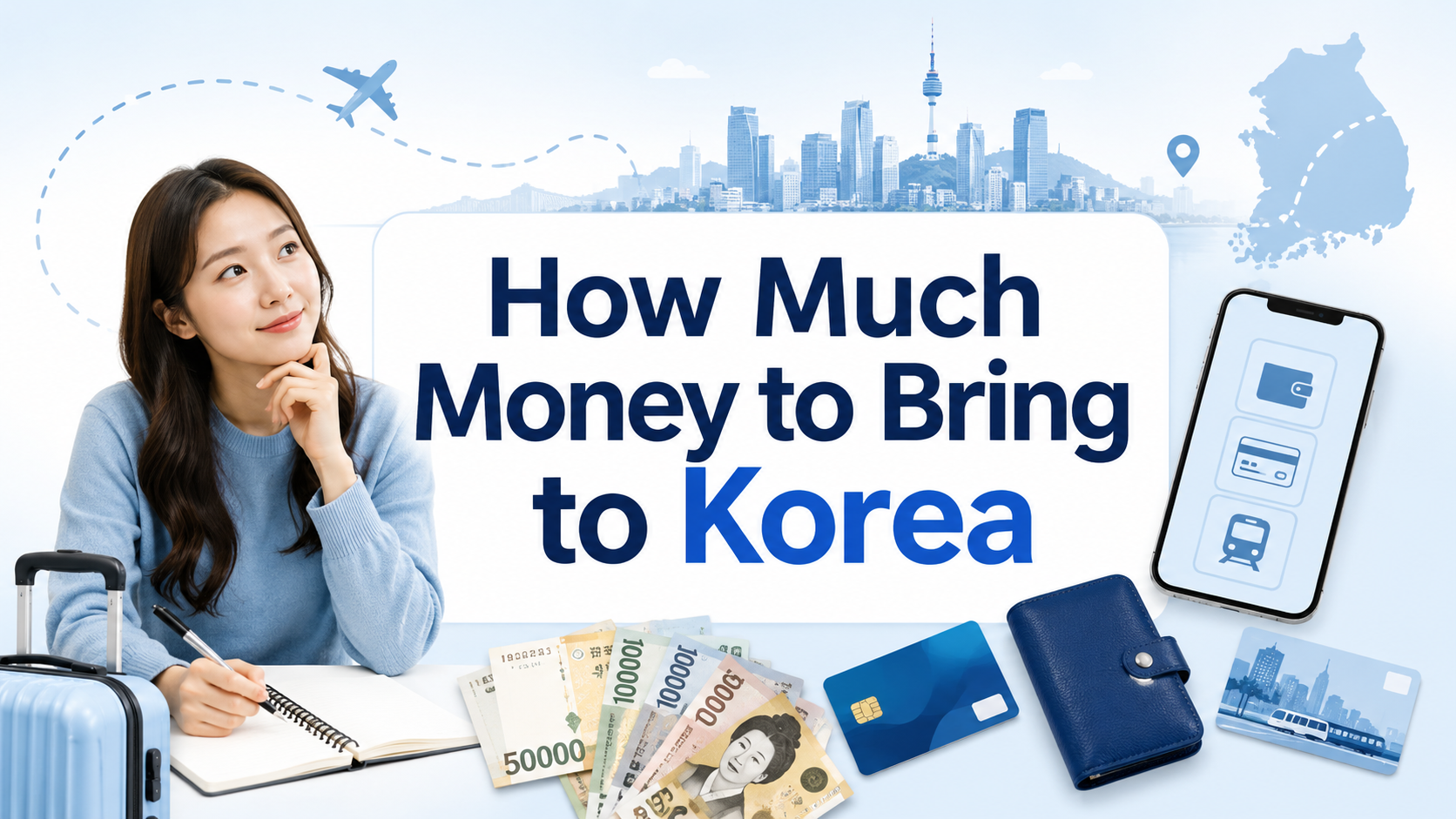
Many first-time visitors wonder how much money to bring to Korea. Korea is a card-friendly country, especially in Seoul and major tourist areas, but tourists should still prepare some Korean won in cash for transportation cards, markets, small purchases, and backup situations.
The right amount of money depends on your travel style, trip length, accommodation, shopping plans, food preferences, and how much you plan to use public transportation. You do not need to carry all your travel money in cash, but arriving with no Korean won at all can make your first day more stressful.
This guide explains how much cash tourists should bring to Korea, when cards are enough, where cash is still useful, how T-money affects your budget, and what payment mistakes to avoid. If you are still preparing your first Korea trip, start with our complete first-time Korea travel guide.
If you want a simple cash-only estimate for a short trip, read our How Much Cash Should You Bring to Korea for 5 Days guide.
Quick Answer: How Much Money Should Tourists Bring to Korea?
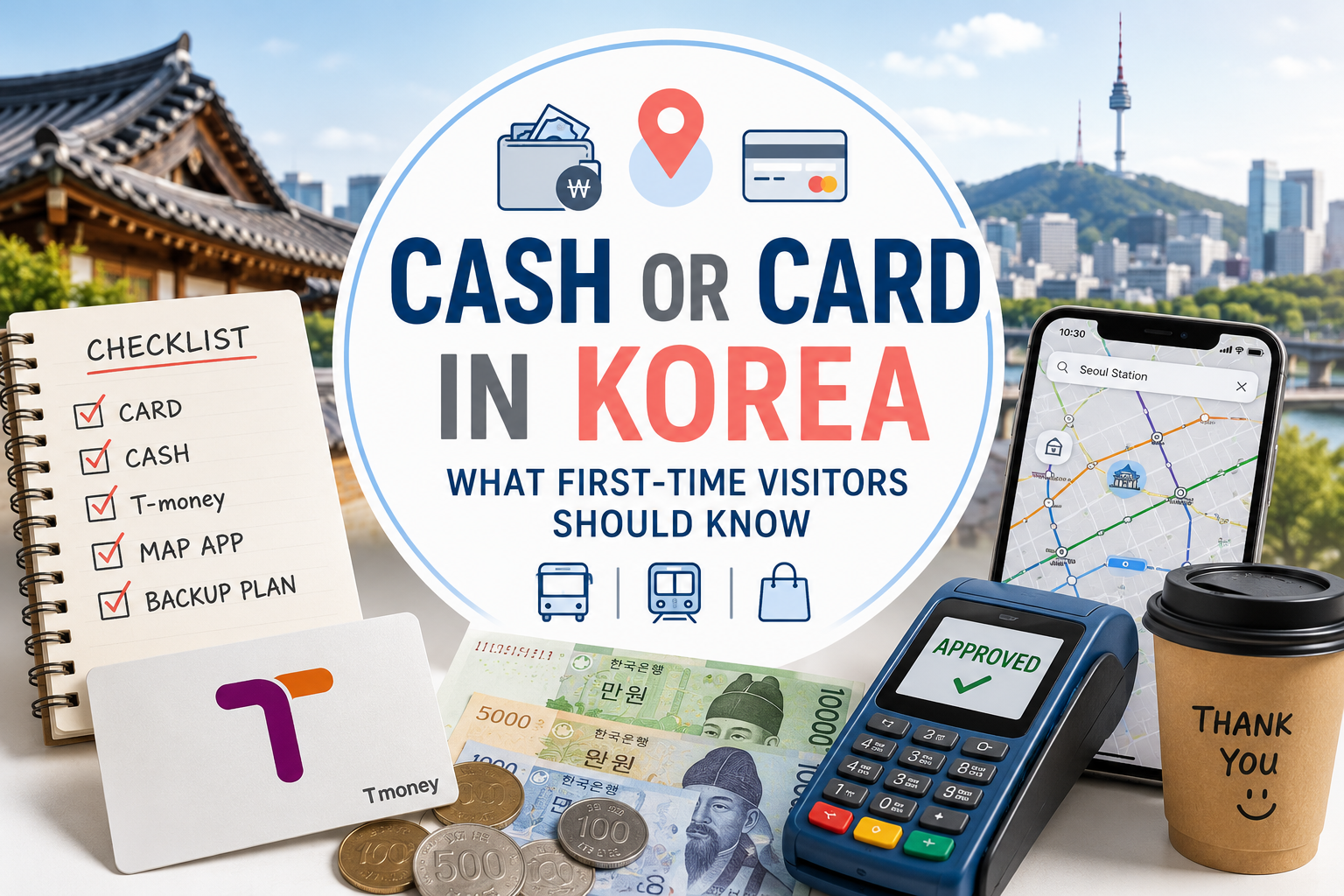
Most tourists should bring a small amount of Korean won in cash and use cards for larger payments. For many first-time visitors, a practical setup is one main card, one backup card, some Korean won cash, and a T-money card for public transportation.
As a simple starting point, prepare enough cash for airport arrival, T-money charging, small meals, markets, street food, and emergency backup. Use cards for hotels, shopping, restaurants, cafes, and larger purchases where accepted.
| Travel Style | Cash Need | Payment Setup |
|---|---|---|
| Budget traveler | Moderate cash for transport, markets, and small food | Cash + T-money + backup card |
| Average tourist | Some cash for daily backup | Main card + backup card + cash + T-money |
| Shopping-focused traveler | Cash backup, but cards for most purchases | Cards + cash backup |
| Family or group traveler | More backup cash than solo travelers | Multiple cards + separated cash |
Planning a 5-Day Korea Trip?
If you are planning a 5-day Korea trip, many tourists should prepare about 100,000–200,000 KRW in cash as backup. This amount is mainly for T-money charging, street food, traditional markets, small shops, and emergency situations, not your full travel budget.
Do Tourists Need Cash in Korea?
Tourists do not need cash for everything in Korea, but they should carry some Korean won. Korea is widely card-friendly, especially in Seoul, Busan, Jeju, and major tourist areas. Hotels, cafes, restaurants, shopping malls, beauty stores, and convenience stores commonly accept cards.
However, cash is still useful in several situations. You may need cash to charge a T-money card, pay at some markets or street food stalls, use certain machines, or handle situations where a foreign card does not work.
For a detailed payment overview, read our cash or card in Korea guide for tourists.
When Cash Is Useful in Korea
- Charging a T-money card
- Traditional markets
- Street food
- Small local shops
- Some vending machines or lockers
- Backup if a foreign card fails
- Emergency taxi or late-night situations
How Much Cash Should You Bring to Korea?
The best amount of cash depends on your trip length and spending style. You do not need to carry your full travel budget in cash. In fact, carrying too much cash can be risky. A better approach is to prepare some Korean won for your first few days and use cards or ATM withdrawals as needed.
For many first-time visitors, it is helpful to arrive with enough cash for airport arrival, T-money charging, snacks, a simple meal, and emergency backup. After that, you can decide whether to withdraw more cash or continue using cards.
If your trip is around 5 days and you want a clearer cash-only estimate, read our How Much Cash Should You Bring to Korea for 5 Days guide.
Practical Tip
Do not arrive in Korea with only one foreign card and no cash. Even if your card works in most places, having some Korean won makes your first day much easier.
Suggested Cash Amount by Trip Length
The table below is a practical reference, not a fixed rule. Your actual needs may be higher or lower depending on shopping, taxis, nightlife, restaurants, and day trips.
| Trip Length | Suggested Cash Range | Best Use |
|---|---|---|
| 1–2 days | Small emergency cash | T-money, snacks, markets, backup |
| 3–4 days | Moderate cash for arrival and daily small payments | Transport, small meals, street food, backup |
| 5–7 days | Cash for several days plus card use | Public transport, markets, small shops, day trips. For a specific 5-day estimate, see our 5-day Korea cash guide. |
| More than 1 week | Bring some cash, then withdraw or exchange as needed | Avoid carrying too much cash at once |
Daily Budget Examples for Korea Travel
Your total Korea travel budget depends heavily on accommodation and shopping. If your hotel is already paid before arrival, your daily spending may be much lower. If you plan to shop for cosmetics, clothes, snacks, souvenirs, or K-pop goods, your spending can rise quickly.
Budget Traveler
A budget traveler may spend mostly on public transportation, convenience store food, simple restaurants, cafes, and free or low-cost attractions. Cards can still be used often, but cash helps with T-money, markets, and small purchases.
Average First-Time Visitor
An average tourist may use cards for restaurants, cafes, shopping, and attractions while keeping cash for transportation card charging and backup situations. This is the most practical setup for many first-time visitors.
Shopping-Focused Traveler
If you plan to shop in Myeongdong, Hongdae, Gangnam, department stores, beauty stores, or markets, cards will be convenient for many purchases. However, cash is still useful in markets and small shops.
Family or Group Traveler
Families and groups should prepare multiple payment methods. Larger meals, taxis, attractions, and emergency costs can add up. It is better not to depend on one card or one person’s wallet.
What You Can Usually Pay by Card in Korea
Cards are widely accepted in many places tourists visit. In Seoul and major cities, many travelers can use cards for most daily spending.
- Hotels and guesthouses
- Restaurants and cafes
- Convenience stores
- Shopping malls and department stores
- Beauty stores
- Clothing shops
- Many attractions and ticket counters
- Some taxis
Still, foreign cards may not work in every machine or terminal. Bring a backup card and some cash to avoid payment stress.
Where Cash Is Still Useful
Cash is especially useful when the payment situation is small, local, or transportation-related. Even if you use cards most of the time, Korean won cash gives you flexibility.
| Situation | Why Cash Helps | Tip |
|---|---|---|
| T-money charging | Cash is often the easiest way to charge | Keep small Korean won bills |
| Traditional markets | Some sellers may prefer cash | Carry small bills, not only large bills |
| Street food | Small payments can be easier | Prepare cash before crowded areas |
| Backup situations | Foreign cards may fail unexpectedly | Keep emergency cash separate |
T-money and Transportation Costs
For most tourists using Seoul subway or buses, a T-money card is very useful. It is a rechargeable transportation card used for subways, buses, and some other payments in Korea.
You should prepare some Korean won cash for charging your T-money card. Depending on the location and machine, cash may be the easiest or required method.
If you plan to use public transportation, read our T-money card guide for tourists and Seoul subway guide for tourists.
Transportation Money Checklist
- Prepare Korean won cash for T-money charging
- Check your card balance before long travel days
- Keep a backup payment card
- Plan airport transfer before arrival
- Check whether your hotel is near a subway station or airport bus stop
Airport Arrival Money Checklist
Your first spending in Korea may happen at the airport. You may need transportation, mobile internet, snacks, a drink, T-money card charging, or a taxi. If you are tired after a long flight, having a payment plan helps a lot.
If you arrive through Incheon Airport, check our Incheon Airport to Seoul transportation guide. If your destination is Seoul Station, read our Incheon Airport to Seoul Station guide.
Before Landing, Prepare:
- One main card
- One backup card
- Some Korean won cash
- Your hotel address
- Airport transfer plan
- Mobile internet option
- T-money plan if using public transportation
Budget by Travel Style
There is no single budget that fits every tourist. A traveler staying in hostels and eating simple meals will spend very differently from a traveler staying in hotels, taking taxis, and shopping heavily.
Low-Budget Style
- Uses public transportation
- Eats simple meals and convenience store food
- Chooses free or low-cost attractions
- Limits shopping
- Needs cash mainly for T-money and small payments
Comfortable Travel Style
- Uses a mix of subway, buses, and taxis
- Eats at cafes and restaurants
- Visits paid attractions
- Shops moderately
- Uses cards often but keeps cash backup
Shopping and Convenience Style
- Uses taxis or transfers more often
- Shops for cosmetics, clothes, snacks, or gifts
- Eats at popular restaurants and cafes
- May spend more on convenience than saving money
- Needs multiple cards and cash backup
Common Money Mistakes Tourists Make in Korea
Most money problems in Korea are easy to avoid. The biggest mistake is relying on only one payment method.
1. Bringing Only One Card
If your only card fails, gets blocked, or is lost, your trip can become stressful. Bring a backup card if possible.
2. Bringing No Cash at All
Korea is card-friendly, but cash is still useful for T-money charging, markets, street food, and emergencies.
3. Carrying Too Much Cash
Carrying too much cash can be risky. Bring enough for practical use, but do not keep all your travel money in one wallet.
4. Forgetting About T-money
Tourists who use subways and buses should prepare T-money early. It makes public transportation much easier.
5. Not Checking Foreign Transaction Fees
Your home bank may charge fees for overseas payments or ATM withdrawals. Check your card terms before traveling.
6. Keeping All Cards and Cash Together
Keep one backup card or emergency cash separate from your main wallet. This helps if your wallet is lost.
For more first-time visitor mistakes, read our common Korea travel mistakes guide.
Recommended Payment Setup for Korea
For most first-time visitors, the safest setup is simple. Do not overcomplicate your payment plan, but do not rely on only one method.
| Item | Why You Need It | Priority |
|---|---|---|
| Main card | Hotels, restaurants, cafes, shopping | High |
| Backup card | If your main card fails or is lost | High |
| Korean won cash | T-money, markets, small payments, backup | High |
| T-money card | Subway and bus travel | High if using public transport |
| Mobile internet | Needed for maps, translation, banking alerts, and route changes | High |
Final Recommendation
Most tourists visiting Korea should use cards for larger payments and carry some Korean won cash for transportation cards, markets, street food, small purchases, and backup situations. You do not need to carry your entire travel budget in cash, but arriving with no cash is not ideal.
If you are planning a 5-day trip, a practical cash range for many tourists is about 100,000–200,000 KRW. For a more focused breakdown, read our How Much Cash Should You Bring to Korea for 5 Days guide.
The best setup is simple: bring one main card, one backup card, some Korean won cash, and prepare a T-money card if you plan to use public transportation. Keep your backup card or emergency cash separate from your main wallet.
If you prepare your money setup before arrival, your first day in Korea will be much easier. You can focus on airport transfer, hotel check-in, food, transportation, and enjoying your trip instead of worrying about payment problems.
Planning Your First Korea Trip?
Start with these beginner-friendly Korea travel guides before your trip.
- How Much Cash Should You Bring to Korea for 5 Days
- First Time in Korea: Complete Travel Guide for Beginners
- Cash or Card in Korea for Tourists
- How to Use T-money Card in Korea
- How to Use Seoul Subway for Tourists
- How to Get from Incheon Airport to Seoul
- Incheon Airport to Seoul Station Guide
- Best Korea Travel Apps for Tourists
- Common Mistakes First-Time Visitors Make in Korea
FAQ
How much cash should I bring to Korea?
You should bring enough Korean won for airport arrival, T-money charging, small purchases, markets, street food, and backup situations. You do not need to carry your full travel budget in cash because cards are widely used in Korea.
How much cash should I bring to Korea for 5 days?
For a 5-day Korea trip, many tourists should prepare about 100,000–200,000 KRW in cash as backup. For a full breakdown, read our 5-day Korea cash guide.
Can I use credit cards in Korea?
Yes, credit cards are widely accepted in many hotels, restaurants, cafes, convenience stores, shopping malls, and tourist areas. However, foreign cards may not work everywhere, so carry a backup payment method.
Do tourists need Korean won cash?
Yes, tourists should carry some Korean won cash. Cash is useful for T-money charging, traditional markets, street food, small shops, and emergency backup.
Is Korea card-friendly?
Yes, Korea is generally card-friendly, especially in Seoul and major tourist areas. Still, cash can be useful in small or transportation-related situations.
Should I exchange money before going to Korea?
It can be helpful to arrive with some Korean won for your first day. You can also exchange money or withdraw cash later depending on your bank fees, exchange rates, and travel schedule.
Can I use only cash in Korea?
You can use cash in many places, but using only cash is not always convenient. Cards are easier for hotels, restaurants, shopping, and larger payments.
Can I use only card in Korea?
Using only a card is risky. Most card payments may work, but you may still need cash for T-money charging, markets, street food, and backup situations.
Do I need cash for T-money?
Cash is often the easiest way to charge a T-money card. If you plan to use subways or buses, prepare some Korean won in cash.
How should I carry money in Korea?
Keep daily cash in your wallet and store backup cash or a backup card separately. Do not keep all your payment methods in one place.
What is the best payment setup for first-time visitors?
The best setup is one main card, one backup card, some Korean won cash, and a T-money card if you use public transportation. This gives you flexibility and reduces payment stress.
“`RELATED POSTS
View all


Where to Stay in Seoul for First-Time Visitors: Best Areas Explained
5월 18, 2026 | by 코트플